Reflecting on The Future of Work

This year my university class BCM313 – The Future of Work – has taught me all about the skill of professional conversation, active listening and how to implement narrative techniques.

The narrative interview with Maliek Edwards was an insightful process into understanding more about different ways of thinking when it comes to the Communication industry. During the interview, I wrote down key terms and phrases that resonated with me.  I wanted to further expand on certain notes. This process combined with the semi-structured interview technique was the basis behind the non-linear structure the presentation followed. 

My own experience with the organisation on the operations side shaped the way I understood Maliek’s professional values and how he implemented this in his work as I had already witnessed the end result of this. Working with the company I have been a receiver of internal messages for two years, hearing Maliek talk about the cooperation as a whole reinforced many ideas that were translated to me previously.

Being on the receiving side of larger branding decisions from Maliek I had to consciously recognise any biased presumptions I made about Malieks values, to counteract this I made sure to use direct quotes in my presentation and focus substantially on the recording of Maliek himself. 

The narrative techniques I used in my presentation to understand Malieks professional values were mainly based around Michael White’s ‘Absent but Implicit’ to understand Maleik’s experience on a deeper level.

During the presentation, many of the quotes that were highlighted by my peers were ones that I also resonated with and built my presentation around. I did also note to my class that the interview with Maliek went for an hour to the narrative style and therefore I focused on the technique regarding a more specific value that Maliejk had in his work which was ‘Network-based work.’ 

After the presentation it was interesting to compare and contrast the various values and ideas that were bought up in other presentations to my own, this step reinforced the individualised experience of each of our subjects as well as the shared experience of people and values as a whole.

References 

Carey, M, Walther, S & Russell, S 2009, ‘The Absent but Implicit: A Map to Support Therapeutic Enquiry’, Family process, vol. 48, no. 3, pp. 319–331.

Russell, S & Carey, M 2002, ‘Re-membering: Responding to Commonly Asked Questions’, International journal of narrative therapy and community work, vol. 2002, no. 3, pp. 23–31.

http://narrativepractices.com.au/attach/pdf/Remembering_Common_Questions.pdf 

A Conversation with UOW’s Vice Chancellor

When Patricia Davison attended a BCM313 lecture, as a student of UOW, I was eager to learn about what kind of decisions and what kind of values she had, through the way she described her role as Vice-Chancellor. Patricia began this role at UOW in May of 2021 and before this was the Dean of St Johns Hopkins School of Nursing in the United States. Patricia describes her experiences working in the U.S, on a six-figure income but unable to obtain a licence or credit card, working during the pandemic and moving back to Australia.

Discussing her previous position, Patricia mentions the opportunities she could have had remaining in America, however, that her decision to come back to Australia was recognised as a forward step by friends, family and everyone that wanted her home. Later on Patricia says “I’ve learned in my career, you need value alignment in your job” and well as “I also feel this is where the universe has sent me,” concerning coming back to Australia. Patricia seems at peace with working at UOW until retirement as she values the lifestyle that comes with living closer to people of importance, her club of life. The terms that Patricia chooses to describe her decision to become the Vice-Chancellor of UOW such as ‘universe’ and ‘alignment’ give me the impression that she has a strong sense of purpose working at UOW, from both a lifestyle and career perspective.

Something that resonated with me was the language that Trish used to describe the students of UOW. The “life blood of universities” was one phrase and that business actions should prioritize the “heartbeat of our university” which was another.  This prioritising of students gave me the impression that Trish feels passionately about the student experience at UOW and has a modern approach to the business model of the university. The specific physiological terms that personify the university also reminded me of Patricia’s previous role at the hospital in America and lead me to ponder whether this was the same approach that she had working at St Johns Hopkins Nursing School. These phrases stuck with me during this story because I felt it reflected how Patricia views the University as a cohesive unit.

During this story discussing UOW with Trish, David Sharpe witness and pointed out that Patricia had created a visual image for him around the idea that universities are this “multicellular organism” with buildings, offices, and classes. This idea of walking through the hallways is like walking through the blood vessels to the very “student body” was something that David also thought of in response to what Patricia had said. David recognised that Patricia felt like somebody that wanted to get involved with the “fundamentals” with the stories she chose to tell.

From reflecting on these moments within Patricia’s stories, I concluded in my mind that Patricia was a Vice chancellor that values student engagement within her new role at UOW. Not only this, but the story behind coming back to Australia gave me insights into the strong values surrounding family Patricia has. The terms that Trish used to describe the “student body” as David recognised, made me draw similarities from Patricia’s previous role in the medical field, caring for patients under strenuous conditions, into her new role as compassion and priority for the students n translated through. Whilst this attribute may not have stemmed from her previous role as she revealed insights of a strong value for family, nonetheless, shape how Patricia approaches the role as Vice Chancellor. Through the act of storytelling as a social practise, Trish helped shape our understanding and her own understanding of her professional life.


References

Carey, M & Russell, S 2003, ‘Outsider-witness Practices: Some Answers to Commonly Asked Questions’, International journal of narrative therapy and community work, vol. 2003, no. 1, pp. 3–16.

Carey, M, Walther, S & Russell, S 2009, ‘The Absent but Implicit: A Map to Support Therapeutic Enquiry’, Family process, vol. 48, no. 3, pp. 319–331.

Russell, S & Carey, M 2002, ‘Re-membering: Responding to Commonly Asked Questions’, International journal of narrative therapy and community work, vol. 2002, no. 3, pp. 23–31.

The trouble uncovers the preference: Narrative Essay

Birds-eye-view of typewriter.
Canva by jakkapan21

Disruptions in our professional life have become more frequent since the infamous COVID-19 pandemic. I’d like to tell you a time when I experienced change and disruption in my professional life and after creating a “revisioning” of what I have told. 

Unemployment rates jumped dramatically in 2020, I found myself included in this statistic. Through pure necessity and persistence I found myself a new position as an events and functions manager. This new role had almost no structure as I soon found myself looking after the front of house, wedding planning, staff, menus, administration and countless other responsibilities. In over my head, and to make matters worse I was studying full time. I became frustrated having to juggle daily operations with angry brides wanting to dance at their wedding. I expressed to my new boss that it might be a good move to employ another person to look after the restaurant managerial duties so I could focus more on events, administration and marketing. My role felt like multiple jobs in one and I didn’t believe I was being paid enough. Frustrated, stressed and stretched. I did want what was best for the business as I grew fond of the people I worked with, however, after this conversation I knew that I wasn’t going to get the support, structure or raise I felt I needed and the business needed to run seamlessly. After 4 months of working there, I handed in my resignation.

The absent but implicit is a concept by Michael White to help us explore in the direction of “what the problem is not.” Maggie Carey describes this as “double listening.” The expressions of distress I used to describe the experience include “In over my head” and “frustrated, stressed and stretched.” I also mentioned how my boss wasn’t listening to the requests I had. The resistance I expressed, speaking up to my boss and eventually refusing to accept the work environment’s negative impact on my wellbeing are all responses. Initially after speaking to my boss I was hoping for a structured solution to running the business together, but when I didn’t receive this, I knew that I wanted to put my happiness before financial stability. Upon reflection I gave value to a supportive work environment. It’s important for me to do my very best in any job environment so when I felt overloaded beyond my pay bracket and that my time wasn’t respected it emphasised the value I held for fair work distribution to maintain a standard in my work.

Previously I have worked in really positive and supportive work environments that allowed me to feel helpful and set a standard of how I deserve to feel in the workplace. I never understood how important this was until I was in an alternative environment. Workplace ethos mostly revolved around recognition and reward. Speaking up for mistreatment was not something that I had to do to exercise. 

Re-membering this story with a close friend (someone in my club of life) they reassured me “feeling valued is important.” They saw how “unhappy” I was and when I mentioned that “sometimes I felt like quitting meant that I’m not resilient” they responded that they felt even resilience had limitations without an available solution. This perspective gave further insights to my time at this particular job. It allows me to see the developments that I have made since this experience and even during this disruption. People that are close to me help shape my own opinions about myself as I know they are people who understand why I live my life and make decisions the way I do.

We are not passive, we create a framework to understand our choices to act. In this instance I chose what I valued – fairness- over my job. A perspective that I didn’t have until viewing my story through the lens of some of Michael Whites theories in the works of Maggie Carey as you can find linked. These narrative therapy practises assisted me in recognising the hidden story and values that I held behind my previous working experience and recounting the experience with someone in my club of life assisted me in shaping my own opinions around why I responded in the manner I did.

References 

Carey, M, Walther, S & Russell, S 2009, ‘The Absent but Implicit: A Map to Support Therapeutic Enquiry’, Family process, vol. 48, no. 3, pp. 319–331.

Russell, S & Carey, M 2002, ‘Re-membering: Responding to Commonly Asked Questions’, International journal of narrative therapy and community work, vol. 2002, no. 3, pp. 23–31. http://narrativepractices.com.au/attach/pdf/Remembering_Common_Questions.pdf 

Re-Authoring Teaching, 2015, Maggie Carey – Double Listening, YouTube, https://www.youtube.com/watch?v=HyKkavEYHS4 

Transferable skills found underwater?

Hello to the teaching team, fellow students of BCM313 and anyone else that has stumbled into the depths of my blog. In relation to a skill that I have learnt, from somebody that supervises at a mini golf facility, I could have gone down many avenues. For instance my paramount putting skills, impeccable interpersonal skills and creative crisis management (for when the 6 year olds birthday party goes downhill). But today I wanted to look at something from my unpaid life that has taught me the most.

Photo By Laura Cross

I have been an avid scuba diver for about 6 years now with an advanced open water licence under my belt. Now the skill here I would say is less so obtaining the certifications and more so what I have learnt through this hobby.

Photo By Laura Cross

Two things in this world that don’t come naturally to me are staying calm and trusting myself. Two things that are absolutely vital whilst scuba diving for your own safety. The failures that I have undergone under 30 meters of water have forced me to work on these qualities and attributes that don’t come easily. I have had learn that panic cannot be a first response once to certain situations and that I have entire responsibility over my wellbeing.

Photo by Laura Cross

A skill to me is dissimilar to a talent. Acquiring skills take practice and patience where as talents are things that come easily to us. In a way learning to scuba dive opened the doorway to many transferable skills that I use in everyday life. I have a calm proactive response to issues that arise at work (especially when it comes to 6 year old birthday parties) and also to life, focusing on what I can do to amend a situation rather that “PANIC I’ve run out of air.” Self management like this has taught me to take a moment to breathe as a first response and when you can’t breath to find solutions.

Contextual Essay: Mouthabet

Summary

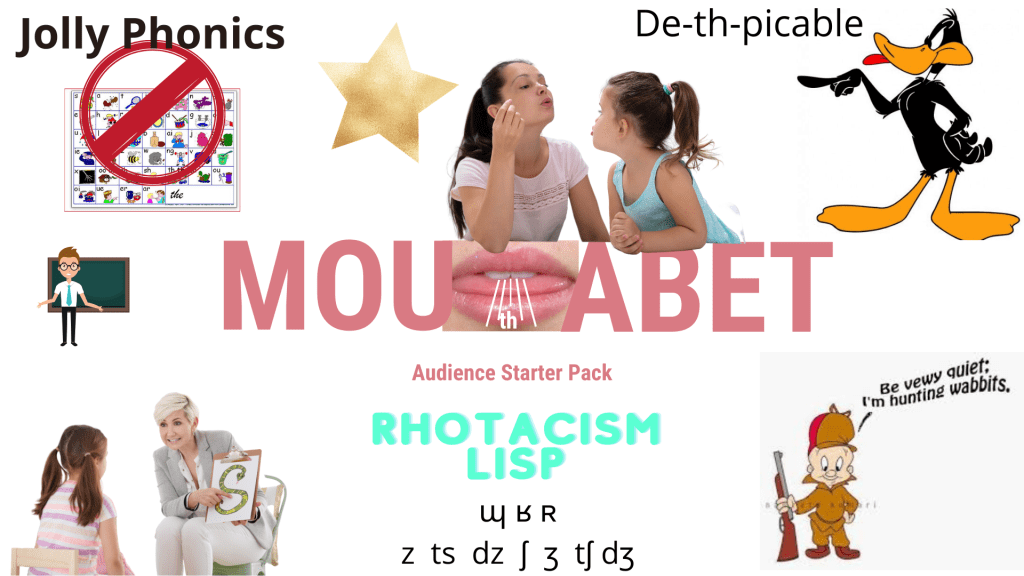
Mouthabet is a set of materials that are designed to support those who teach students to decode words and identify individual sounds and sound blends. The materials will help focus and engage students to discover the lip, tongue and mouth actions needed to produce specific sounds (phonemes) represented by letter shapes (graphemes). I wanted to share this resource that I created with those that it could benefit.

Website design took a large portion of time, however once set up, it fit into the FIST strategy. After noting the lack of website visitors, I decided to create a small community of like minded people on social media in an attempt to increase website traffic.

Through creating these social media channels, I thought I would be able to reach my niche target audience of teachers, tutors, parents and speech pathologists.

Learning moments

The main focus of the concept Mouthabet is sound production which involves lips, tongue, teeth, air expulsion, voicing and nasality. There are three main kits that are available for purchase online in a pdf format. The ultimate goal was to make this resource accessible to those looking for a visual aid to phonics.

  • Creating the social media pages noticeably increased traffic to the Mouthabet’s website. Over the course of this project, 74% of the websites traffic has been from the direct link through Facebook or Instagram. Over this period there have been 77 sessions on the website and 57 of those have come from social media. These sessions have an average length of 11 minutes. This reinforced that the layout of the website was effective enough to retain attention and for people to navigate through. It’s important to not though if the tab was left open and not used, this data still records this time.

As traffic increased, the Mouthabet website subscribers also increased in frequency and I am totalling at 14 subscribers as of now, as you can see I began the social media accounts in mid-July.

This emphasised how vital it was to keep engaging on social media to assist with reoccurring site visitors.

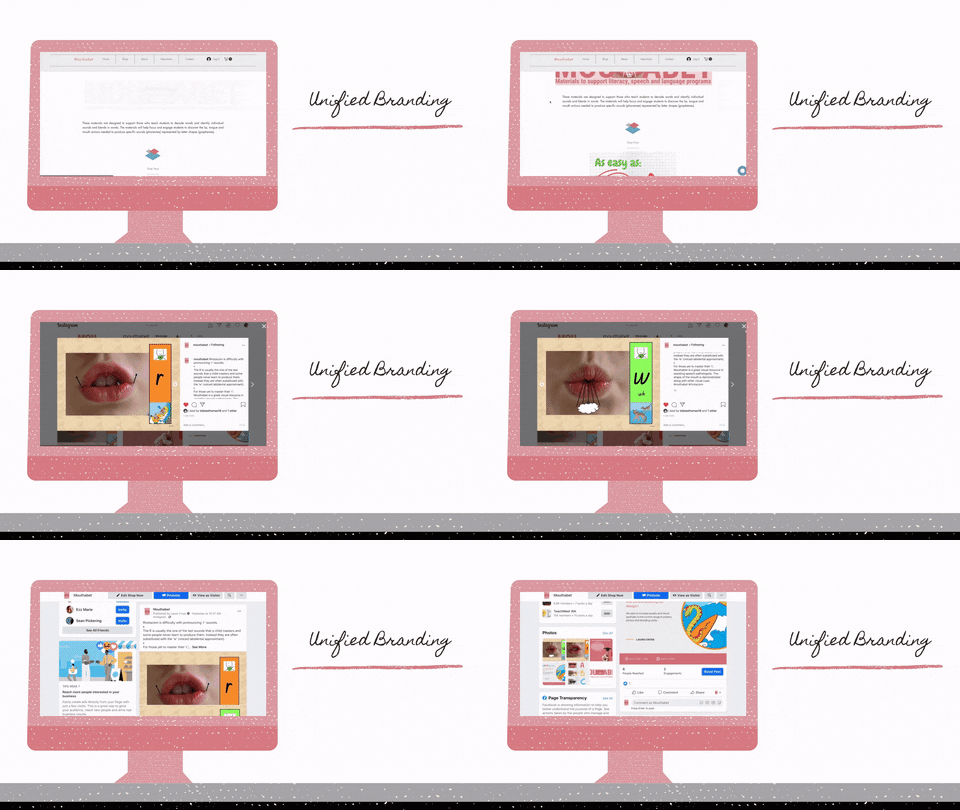
The Feedback I received from social media users and peers was to create a unified brand and aesthetic across all three platforms. This way, if traffic was directed from the social media pages, the website would seem familiar. A colour scheme and universal logo was selected. Consistency was something that was decided after feedback and the importance of unified branding was something that I further explored into through Coombers 2002 study into the definitions of branding. That it is more than just a logo. Mouthabet is now a persona heard through every caption.

The continuation of Mouthabet is something that is definitely on the cards. Currently the products themselves are being redesign and a video element is being utilised for a future prototype. Whilst doing this I plan to implement what I have learnt from my small following on social media and increasingly reach out to the target niche with engagement and hashtags.

Creating an audience in such a niche area is something that has been difficult as it’s not necessarily something that the BCM cohort wants to follow, however, the slow growth has been steadily increasing. The informational posts on the pages have been paired with longer engaging captions to hold the attention of my small audience. For the future trajectory of this artefact, reaching out to nano influencers in the education niche could be a proactive move in gaining recognition.

Sources

Coomber, S. (2002) Branding. Oxford, United Kingdom: John Wiley and Sons, Inc (ExpressExec Marketing). Available at: https://search-ebscohost-com.ezproxy.uow.edu.au/login.aspx?direct=true&db=nlebk&AN=66767

Ismail, K, 2018, ‘Social Media Influencers: Mega, Macro, Micro or Nano’, CMS Wire,  Simpler Media Group, Inchttps://www.cmswire.com/digital-marketing/social-media-influencers-mega-macro-micro-or-nano/#:~:text=That%20shape%20can%20be%20split,are%20really%20far%20more%20nuanced  

Zain, SZM, Hussin, ARC & Selamat, MH 2019, ‘Derivation of Hashtag (#) Factors for Hashtag Marketing Model (HASHMAM) in Social Media Platform’, 2019 6th International Conference on Research and Innovation in Information Systems (ICRIIS), Research and Innovation in Information Systems (ICRIIS), 2019 6th International Conference on, https://search-ebscohost-com.ezproxy.uow.edu.au/login.aspx?direct=true&db=edseee&AN=edseee.9073657

Part 3: ZAFUL the influencer brand

For the time space of a week I experienced the brand Zaful as a follower of their instagram page as well as regularly checking their website for any changes. I watched how the brand communicated to their followers and checked both how often they would use influencers as well as the types of influencers they used.

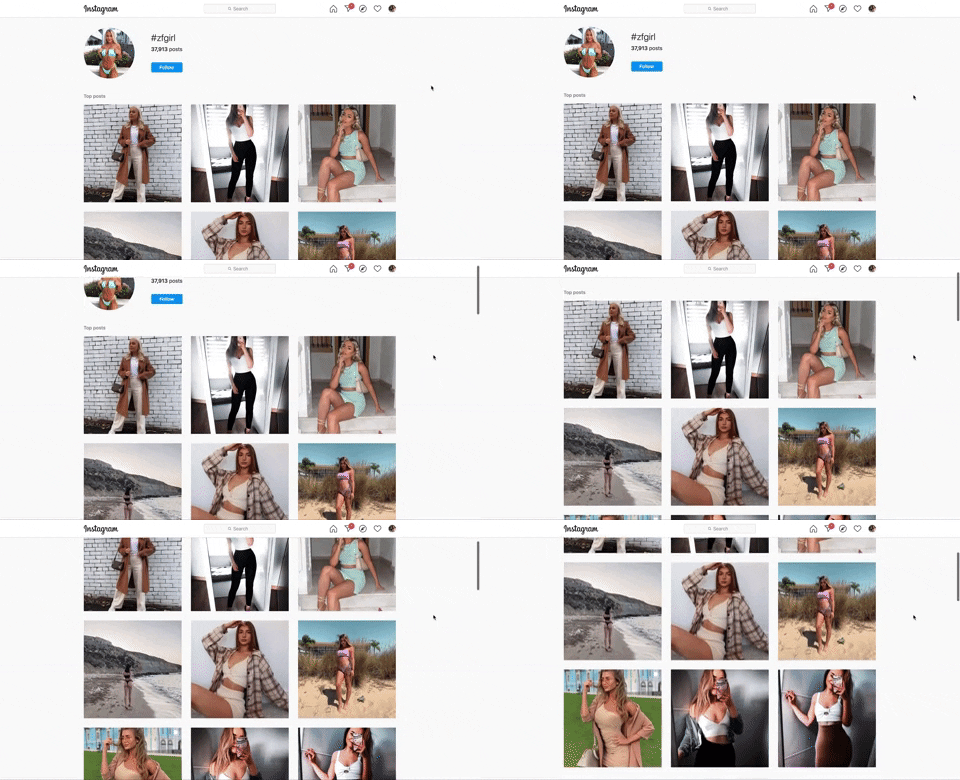
The comprehensive influencer program is not only something that you are scouted out for but something that people over 2,000 followers can apply for. This gives Nanno influencers the option to promote the clothes by applying to receive free products, these influencers are usually required to post about the products. A lot of these posts can be seen in the Z-Me or the Zfgirl hashtag sharing the clothes that they have received. This side of Zaful’s influencers is more of a community based endorsement most frequently used by smaller creators. This particular way in which Zaful has created a small army of nanno influencer is also low cost and low maintenance for the brands resources as they aren’t having to create their own content or pay people to create it for them.

There are also opportunities that people are able to involve themselves as larger influencers, they have the opportunity to make a 30% commission off their sales as well as receiving free merchandise. This program is more targeted towards micro influencers thats on average have a following over 10k. To do this, pages must sign up to ‘First Grabber’ to verify their account, after this if they are high profile enough they receive things like discount codes for their followers and an amount of money per post. Micro influencer have to be managed unlike the nanno influencers as the deal struck with someone with a niche in fashion as 100k followers would be different to the contract between someone with 5k and a focus on travel.

Zafuls content

The content created by these micros influencers is shared to their own audiences as well as on the Zaful instagram page. As many of these influencers have high quality images and experience, Zaful doesn’t need to micro manage to obtain quality content. As can be observed here.

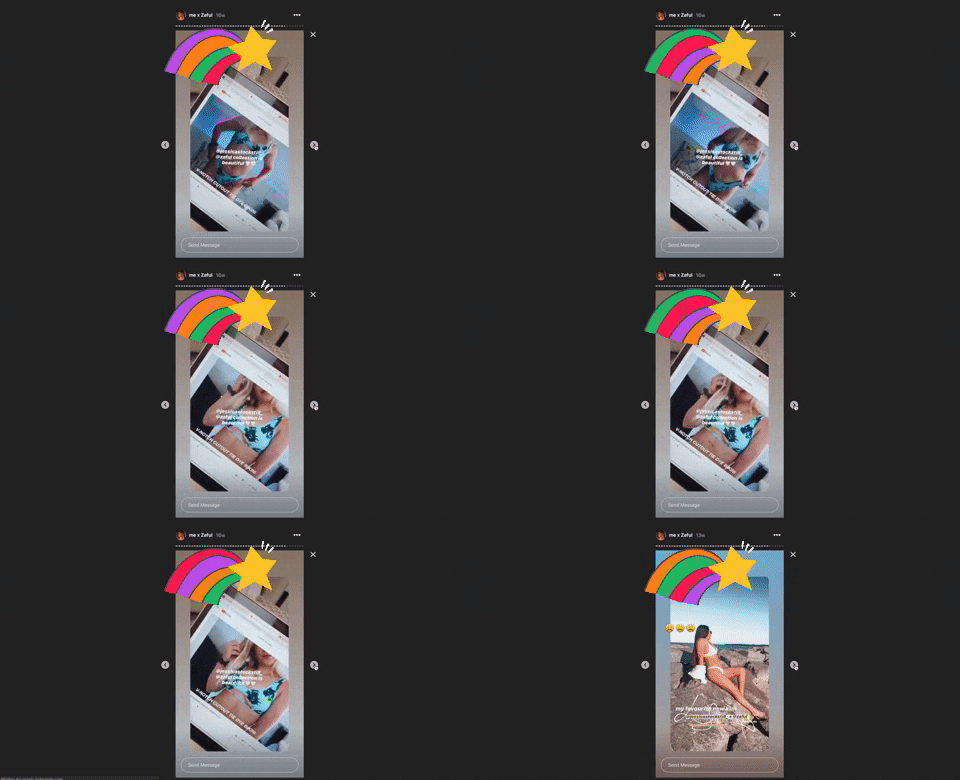
The other form of Influencer content that is used is when zaful uses a particular influencer to be the face of a new line of clothing or swimwear. This can by seen with as below Jessica Stockstill’s affiliation with a recent swimmer line that came out. During this association Jessica posted multiple images on instagram tagging Zaful as well reposting her followers who purchased through her onto a highlights reel. This kind of heavier interaction between influencer, brand and audience is the highest maitnence of influencer contact that I have seen Zaful use recently.

Image of Jessica Stockstill’s collaboration on Zaful website
Image of Jessica Stockstill’s highlight reel
Image of Jessica Stockstill’s page

The week analysis period:

Overview of content analysis
Influencers content used in week of analysis (usernames removed)

.“One generally needs to understand that the larger the audience, the less focused it is likely to be, and therefore the broader the offer will probably have to be”

Joe Sinkwitz, CEO at Intellifluence

Conclusion

What I have concluded through out this research artefact is that Zaful most commonly users micros influencers that suit the type of brand image they attempting to portray. Using Nano and Micro influencers is also an attempt to be viewed as a global brand rather than a Chinese based brand.

By focusing a large portion of their marketing on creating a comprehensive self managed endorsement opportunity for pages with above 2,000 followers as well as managing relationships with larger pages Zaful is able to outsouce content creation, reach their target market effectively and build their brand reputation through the words of their promotors.

Zaful effectively uses their influencers to achieve a high engagement level, it is important to note though that when a brand is endorsed by influencers, it is expected to achieve a certain quality otherwise influencers will begin to turn down these collaboration opportunities to save their reputation.

Part 2: Influencer insight

The influencer market is a 10 billion dollar industry with is relevance spreading to many corporations. These influencers are found across social media such as Instagram, Snapchat, YouTube, Twitch and now on TikTok. Influencers can be defined as a person with the ability to persuade potential buyers of a product or service by promoting or recommending the items on social media. 

Zaful has taken advantage of it’s online location by working collaboratively with these online personas to promote their product and shape perceptions that people have of the brand. From what I’ve noted whilst studying influencers, the way in which they endorse products acts like a word of mouth and feels reputable. Many influencers only work with brands that will enhance the relationship that they have with their audience.

Ismail in 2018 went into depth on defining social media influencers into four categories: Mega, Macro, Micro and Nano. These are all loosely determined by the popularity and type of influencer a company is working with. To gain first hand insight I decided to analyse an influencer in each classification.

Mega

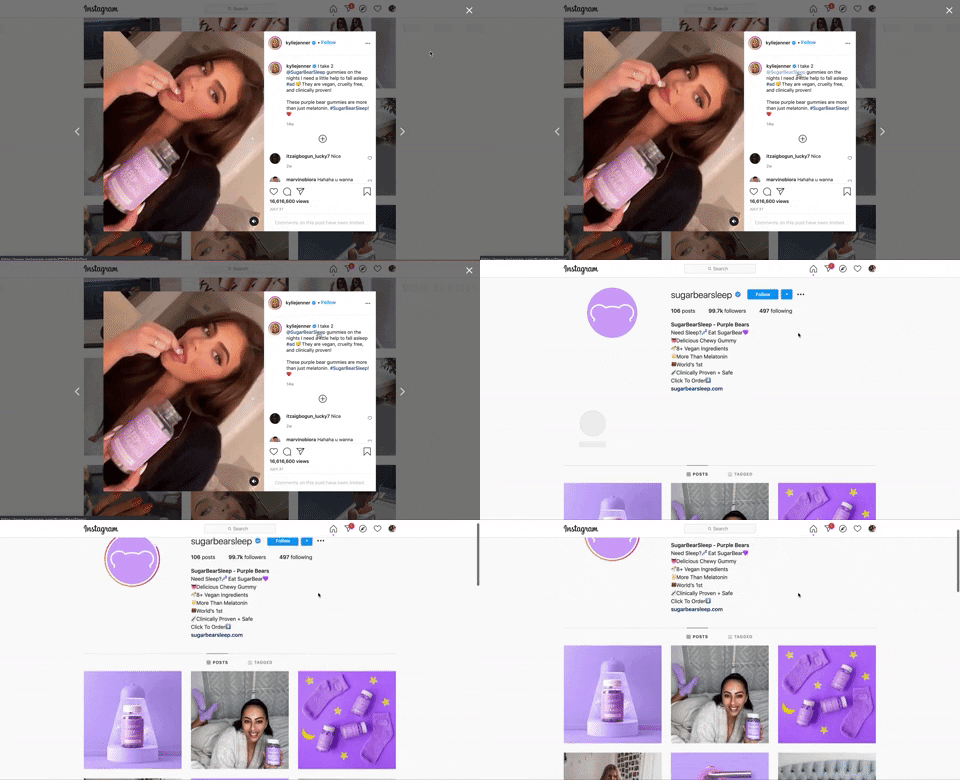
Mega influencers are people who often have celebrity status and are more famous than influential. For example ‘Dwayne Johnson’ or Will Smith. The example I explored further was Kylie Jenner and her sponsorship with sugar bear sleep. Kylie has 200 million followers and initially rose to fame through reality TV. The Kardashians have built an influencer empire and have premium prices to promote products.

Animated GIF

Macro

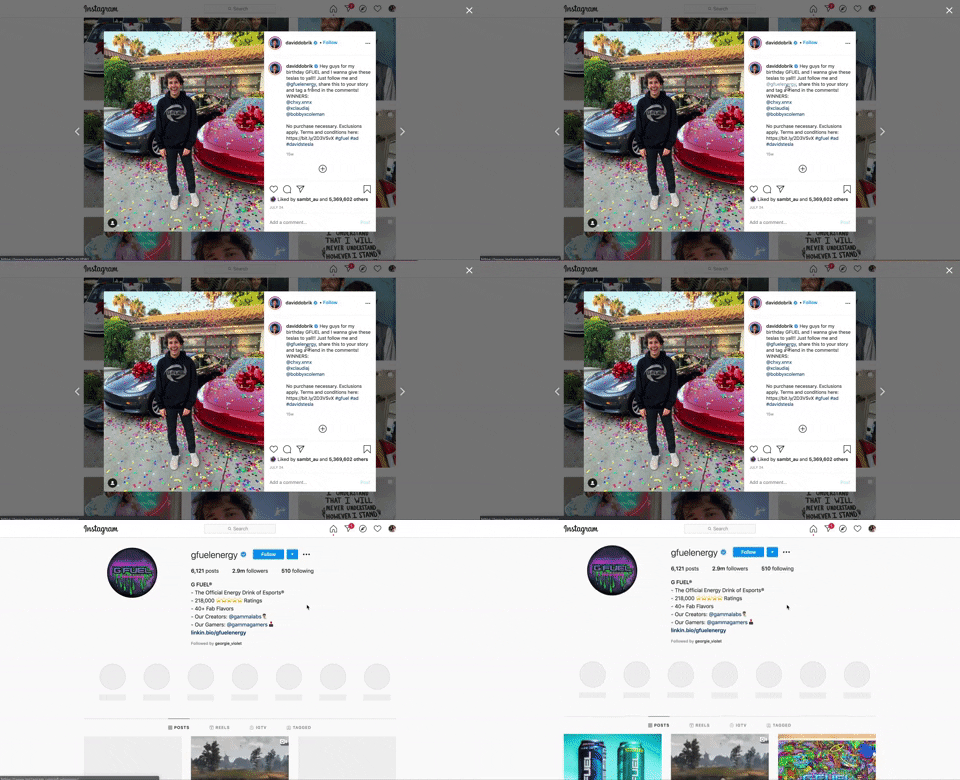
These influencers are a step down from the mega influencers. The main differentiating factor being they have at least 1 million followers but usually rise to recognition online, not through traditional media. These influencers usually have a following on multiple platforms. A few examples are people such as Emma Chamberlain and James Charles that are influencers for brands like Louis Vuitton and Morphe. The profile that I looked closer into was David Dobrik and his endorsement of g fuel energy in this example shown. These influencers also are more expensive to partner with and have a rather large reach.

Animated GIF

Micro

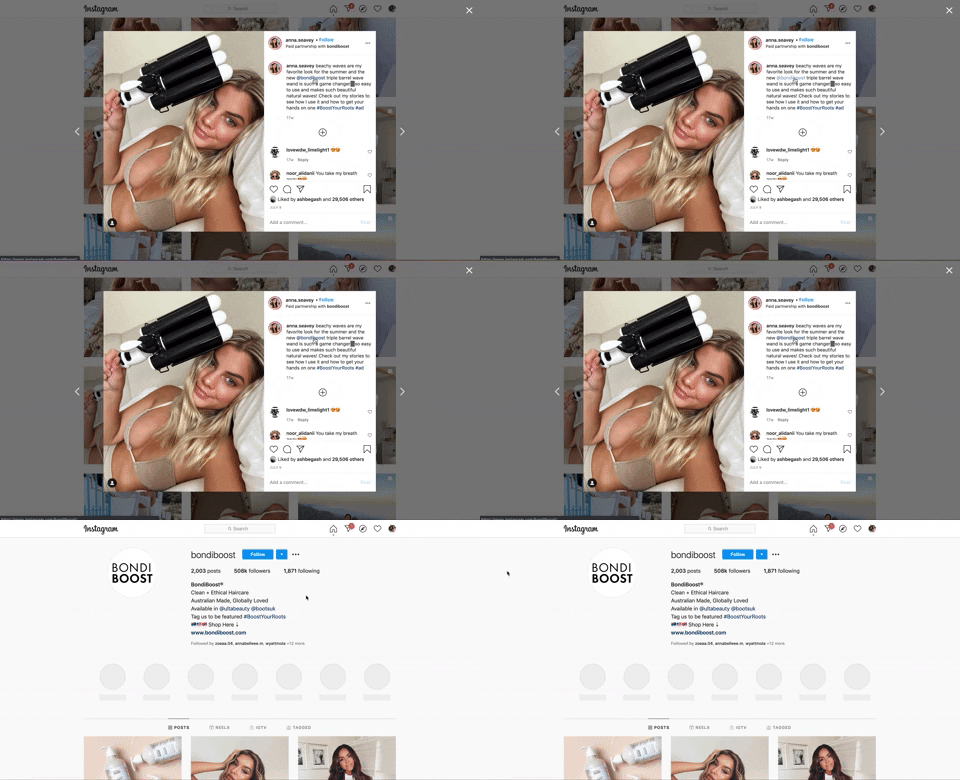
These influencers have anywhere from around 2k- 1M. There is no clear definition of exactly when a micro influencer graduated into a macro influencer. At the lower end of the spectrum micro influencers tend to have a niche more of a niche audience. This kind of audience is great for targeting a more concentrated target market. Despite not having as much reach the micro influencers tend to be the best to work with. Anna Seavey is the example that I decided to go with. She has over 300k follower and works with brands such as bondi boost, her main focus being fashion.

Animated GIF

Nano

This for personas that have around 1,000- 5,000 followers and status influence usually in the community. This can be anyone from a pastor to a community leader. A prime example of this is within the Wollongong community there is a ‘community leader’ night scene of Wollongong is ‘The Beast,’ if you ask students from the local university most of them will have head of or met ‘The Beast.’

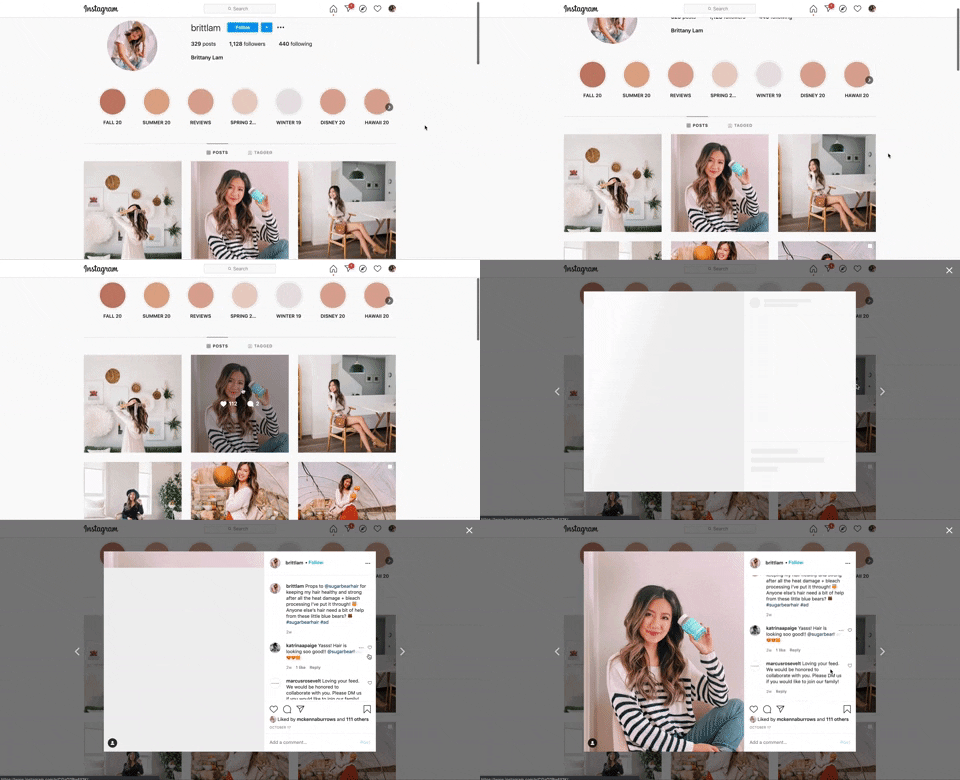
I thought to tie in the influencers by looking into a Nano influencer- @brittlam that promoted the same gummies that Kylie Jenner the Mega influencer did. This is a great example of why using influencers from all over the spectrum is vital. Brittany smaller following are much more likely to isten to what she promotes as even though she has less reach she is seen as more trustworthy.

Animated GIF

Conclusions

The main thing I have drawn from observing this different classifications of influencer is that number of followers aren’t always the main thing to focus on. It is a strategic decision to focus on micro influencers as their audiences are usually refined and therefore companies can reach their particular target market in the most concentrated way.

References

Haenlein, M, Anadol, E, Farnsworth, T, Hugo, H, Hunichen, J & Welte, D 2020, ‘Navigating the New Era of Influencer Marketing: How to be Successful on Instagram, TikTok, & Co’, California Management Review, vol. 63, no. 1, pp. 5–25, viewed 6 November 2020, <https://search-ebscohost-com.ezproxy.uow.edu.au/login.aspx?direct=true&db=heh&AN=146409051>.

Ismail, K, 2018, ‘Social Media Influencers: Mega, Macro, Micro or Nano’, CMS Wire,  Simpler Media Group, Inc https://www.cmswire.com/digital-marketing/social-media-influencers-mega-macro-micro-or-nano/#:~:text=That%20shape%20can%20be%20split,are%20really%20far%20more%20nuanced  

Part 1: Zaful the Brand

This blog post is the first in a three part series. We will be continuously exploring he implications of the brand Zaful using online influencers. Ecommerce stores are on the rise and have been used more frequently due to the current global climate. Shopping centres became hot spots for Covid-19 and people started turning to their computers avoid these places.

Prefacing this information It is important to recognise that I will only be publishing the evidence as deemed ethically appropriate, anonymity of those not financially affiliated to Zaful (eg: comments, reviews, smaller influencers) will remain anonymous. Rachel Winter and Anna Lavis “Looking, But Not Listening?” assisted in drawing ethical guidelines around digital ethnographic studies for this process.

Stephen Coomber in his study on branding, stressed the complexities of this notion being far more than just a image signifying ownership. Coomber highlights, in a definition of branding, that it is about creating a mutually acknowledged relationship between supplier and buyer. Coomber also goes into the importance of branding over the product. I thought this was something important to keep in mind whilst deconstructing the WHY behind Zaful use of influencers online.

From looking at Zafuls website I recognise that everything is cohesive and each image intentional. The experience of going through all the pages was overwhelmingly saturated with content. The brand is selling not only fashion but a particular image. I will go further into the Instagram image during section three of this blog series after we explore the depths of the Influencer world, but this was just as evident on instagram. This complements what I learnt about branding being less about the product and more about the communication between buyer and seller. By the images Zaful presents online I can only assume that their main target market is 18-25 year old women and its this perfect image that sells these products to the target.

To gain more insight I went to the recent reviews that Zaful has had to understand how the products are received by customers. They were however overwhelming negative, as a qualitative research it is more important to find out the why.

The negative reviews almost always mentioned the lack of quality from the products. Although there were some good reviews that mentioned aesthetics and customer service they were very far and few.

I decided to take to twitter to then gain further insight into the perception of Chinese products from the BCM241 cohort. The following are key words interpreted from the question. What associations do you make form the term “made in china?”

What I have concluded from my own experience and observing interactions of Zaful to its customer is that they are very much trying to adopt the perception that they are a global brand instead of Chinese brand due to the negative associations towards mass production and low quality. Their main channel to change this is through their targeting to the western world with images of non Chinese women. Zaful, however has taken this a step further and is selling the picture perfect instagram-able life to this target audience.

References

Coomber, S. (2002) Branding. Oxford, United Kingdom: John Wiley and Sons, Inc (ExpressExec Marketing). Available at: https://search-ebscohost-com.ezproxy.uow.edu.au/login.aspx?direct=true&db=nlebk&AN=66767

Journal of Empirical Research on Human Research Ethics 2020, Vol. 15(1-2) 55–62 © The Author(s) 2019, Article reuse guidelines: sagepub.com/journals-permissions DOI: 10.1177/1556264619857529 journals.sagepub.com/home/jre

ZAFUL Expanding Multi-Country E-commerce Portals and Exploring Global and Local Identity’ 2019, FRPT – Ecommerce Snapshot, p. 9, viewed 31 August 2020, <https://search-ebscohost-com.ezproxy.uow.edu.au/login.aspx?direct=true&db=bth&AN=135720890&site=ehost-live&gt;

Bendure, V 2019, ‘Using Influencers to Market Goods and Services’, Audiology Today, vol. 31, no. 6, pp. 60–61, viewed 5 November 2020, <https://search-ebscohost-com.ezproxy.uow.edu.au/login.aspx?direct=true&db=rzh&AN=139763081>.  

Hongtao Yao & Yiyuan Zhang 2013, ‘Explore the New Mode of Chinese Clothing Brand E-commerce Marketing through Data Analysis’, Advanced Materials Research, vol. 821–822, pp. 750–754, viewed 3 November 2020, <https://search-ebscohost-com.ezproxy.uow.edu.au/login.aspx?direct=true&db=inh&AN=14437441>.  

Week 11 The Internet of things!

I didn’t quite grasp this concept in the beginning of the lecture, however, the idea that we will continue to connect everything to the internet if it will increase capabilities made me understand. The first thing I though of was the app controlled colour bedroom lights, you can program them to turn on, strobe or be a certain colour. The simple concept of light from the sun, to a candle, to a lightbulb and now this! Then I thought lets think larger and smart homes, entire homes that are revolutionised as Things of the Internet. Voice controlled, interactive and connected.

The further I got into this lecture I started thinking, wow, humans could be totally connected to the internet one day and as soon as I said it out loud I realised that we already are! Our thoughts and consciousness is recorded phones and smart watched, the amount of steps we take in a day. There is an algorithm and sata that knows when we happy, depressed. Check out this Forbes article about Target knowing a teenager was pregnant before her father did.

Imagine if all your data over your life was collected from what you watch, what you write and what you read to create your own artificial intelligence that acted independently. It’s a super scary hypothetical but honestly one day I don’t think it will be that far fetched.

Week 10: Dark fiber….who is watching!?

Do you have a sticker over your laptop camera? Is someone watching?

In my last blog post we explored how the shield of anonymity can be used to hold companies and governments accountable and dodge negative consequence. But what happens when people and groups use anonymity to run a muck.

A prime example of online criminal organisations is Lulzsec, a group of people that never knew each-others identity but managed to become a collective. This article by the guardian has more information into the specifics of what they did and how they were caught.

The main focus here is that in 2011 these guys were able to hack the FBI. It;s this amount of power that hackers can have that put the everyday security at risk

This article by the conversation looks into cybercrime and webcams being accessed without permission. Its a concept that I still feel removed from however the reality is that this is something that could happen to anyone without them even knowing. Webcam lights can be disabled and breaches in security happen more ofter than it seems. My remediation reflects the caution we need to take as individuals in making sure our data is as secure as possible.