There is a certain type of consumer that wants to buy everything, doesn’t care if it’s ethically sourced, how much it costs or how good the quality is. So who are these ideal customers? Children.
It is vital that as marketers we don’t lose sight of the vulnerability of children. Self regulation as well as following the ethical codes and laws surrounding advertisements is of the utmost importance. The promotion of foods with high sugar and fat content and beverages containing alcohol are just some of the many concerns of ethical promotion. Deception and manipulation tactics can be avoided in this industry and will ultimately hurt brand image.

Children don’t have the ability to comprehend that somebody is trying to manipulate them, or motives that underlie certain advertisements. These concerns have evolved alongside the introduction of new forms of technology (I’m looking at you TikTok). Digital and social media advertising is the new platform for the latest wave of unethical marketing. Youtube, Instagram, Facebook, Twitter. Nearly 80% of all Australians are on social media, including children.

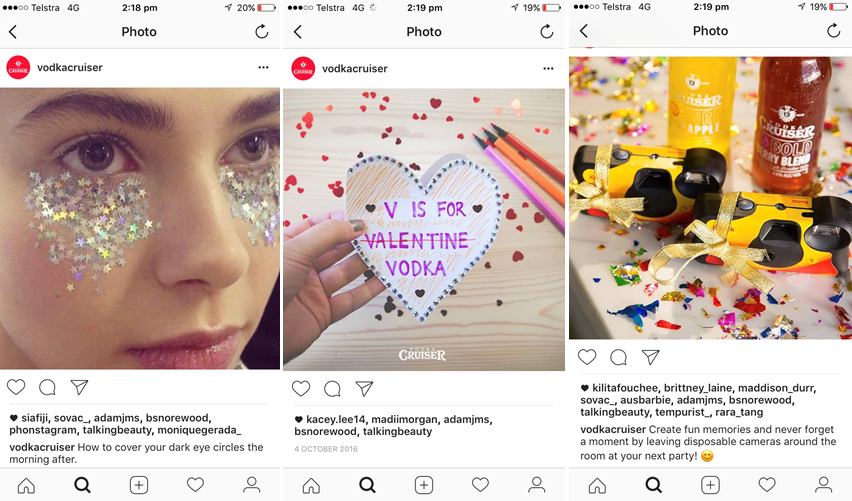
In 2017, the Cancer Council made a complaint surrounding Instagram posts by Vodka Cruiser. The series of advertisements depicted a “youthful” model with “glitter” and a caption that alluded to binge drinking and hangovers. This complaint was upheld by the Advertising Standards Bureau. They confirmed the complaint that Vodka Cruiser was promoting to a younger audience and deluding them into believing the consumption of this product, due to the appearance of the model, was okay. The company took down the following photos:

Sarah Jackson, Legal policy adviser for Cancer Council Victoria.
“We are concerned this type of social media advertising is happening behind the scenes and alcohol brands are using it to target young people.”
The ABS has expressed their concerns surrounding the marketing of alcoholic products to underage persons before, a study revealed that advertisements for alcohol on social media were linked to underage drinking. They found that this ad was against the Prevailing Community Standards on the promotion and consumption of alcohol and deemed the advertisements as deceptive as they were targeting an audience that was not allowed the product.

It is the developmental stage of the brain that leaves children susceptible to misleading or deceiving advertising. This is outlined by Kieth A Gorgos where he explains how children perceive marketing differently to adults and how they are less sceptical and defenceless until they acquire “advanced knowledge.”

Fast food giants and cooperations with unhealthy perishables are notorious for testing the the ethical boundaries when it comes to advertising their unhealthy products to the younger generations and deceiving. Under the Australian Association of National Advertiser’s Codes of Practice, is the Code for Advertising and Marketing Communications to Children and the Food and Beverages Advertising and Marketing Communications Code children should be protected from advanced marketing techniques, however, regulation alone seems generally ineffective.
The use of cartoons from popular movies in Mcdonalds advertisments is another example. All of the movies that are endorsed in these advertisments and the focus on the happy meals exemplify the focus on capturing the eye of the younger generation and to instil a nagging effect towards the parents. When Kung-fu Panda says that “ you can do impossible things when you unlock your inner awesomeness” just before catching a happy meal, or when eating a “magic chicken nugget” makes you sound like Alvin from the Chipmunks, it’s a direct violation of multiple ethical codes under AANA as well as misleading the minds that are yet to have the capacity of understanding these claims are commercialised and not accurate.
Code for Advertising and Marketing Communications to Children
2.7 Parental Authority (b) must not contain an appeal to Children to urge their parents, carers or another person to buy a Product for them, (c) must not state or imply that a Product makes Children who own or enjoy it superior to their peers;
Food and Beverages Advertising and Marketing Communications Code
3.1 Advertising or Marketing Communications to Children shall be particularly designed and delivered in a manner to be understood by those Children, and shall not be misleading or deceptive or seek to mislead or deceive in relation to any nutritional or health claims, nor employ ambiguity or a misleading or deceptive sense of urgency, nor feature practices such as price minimisation inappropriate to the age of the intended audience.

The focus on the characters and the “fun” element in the advertisements, Mcdonalds is deceptive because of certain advertisements that promote an idea of happiness and fun through toys and marketing ploys, the food usually as an after thought. This is seen in the ‘free toys’ and the cartoons used.

This year The Advertising Standards Community Pannel found Mcdonalds in breach of the Quick Service Restaurant Initiative for Responsible Advertising and Marketing to Children (QSRI), which the company is signatory too. The “MyMaccas” app was a devious way to market to children by targeting them online, through games. In order to advance in these game children have to scan product packaging. This is deceptive in its own format and clashes with 2.2 (iv) Code for Advertising and Marketing Communications to Children. The marketing doesn’t seem like “commercial communication” and therefore is deceitful in its form.
“These companies claim that they don’t market junk food to children, and yet they’re using games, themes and visuals that are clearly designed to entice kids.”
Jane Martin from the obesity policy coalition.

The issue with this kind of ethical deception towards children is that there are little to no implications especially for large transnational cooperations when they break multiple ethical codes. The Australian Competition and Consumer Commission is an independent authority from the Australian government identifies breaches of deception in advertisement when they transfer from ethical over to legal issues. However, there are a multitude of complaints made to the ACCC, just like the ones mentioned, that have no legal repercussions. Meaning that the deception and manipulation of child consumers remains a prominent ethical issue in the marketing industry.
Where does this leave us? It is our duty to become leaders of industry without overstepping such ethical boundaries. As consumers, the digital space is as much a place for accountability and calling brands out as it is their playground. The internet never forgets and in a world saturated with brands, consumer attitude is vital to brand success.
 LAURA
LAURA